It was a bright, gentle afternoon on a quiet golf course, the kind of day when the air feels soft against the skin and the steady thud of golf balls echoes peacefully across the open green. A small group of players stood scattered across the fairway, their laughter mixing easily with the faint rustling of the breeze. Everything felt simple and tranquil—until a fragile, trembling sound cut through the calm. At first, it was so faint it could have passed for the whisper of wind slipping through distant branches. But as the cry lingered, thin and strained, something about it—something raw and pleading—made the group freeze. This was no bird, no creaking tree. It was a cry for help, weak and slipping away.
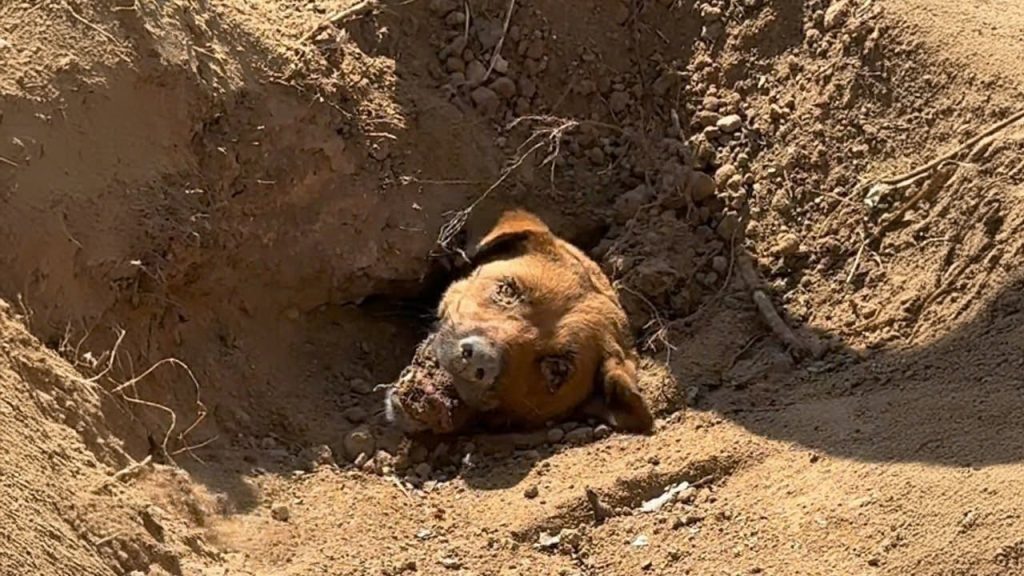
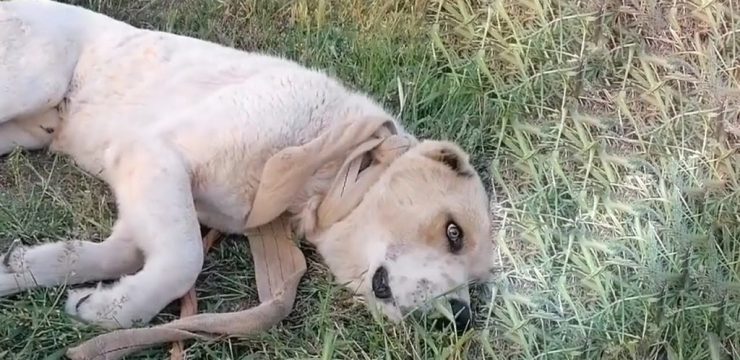
With a rising sense of unease, they walked toward a mound of earth near the edge of the course. The closer they moved, the clearer the whimper grew—muffled but undeniably alive. Their hearts tightened. In that instant, instinct took over. Using their golf clubs as makeshift shovels, they dug quickly, their hands pushing through the heavy, damp soil. The dirt clung to their fingers as adrenaline pushed them to work faster, harder. Then, through the shifting soil, a form appeared—frail, trembling, and covered in dirt. It was a mother dog, struggling for breath, her eyes half-closed and her body weakening by the second. She had been buried alive. Yet somehow, she was still clinging to life.
They cleared the dirt from her face and body with the gentlest touch they could manage. When the fresh air reached her lungs, she gasped—a slow, desperate breath—and blinked her tired eyes. Though dazed and frightened, she didn’t lash out. She didn’t try to run. Instead, she stood on unsteady legs and looked up at the strangers who had saved her with a quiet, heartbreaking courage. Then, gathering whatever strength she had left, she turned away and began to walk. Every few steps, she glanced back, urging them to follow. The group exchanged stunned looks but felt an unspoken understanding. They trailed behind her without hesitation.
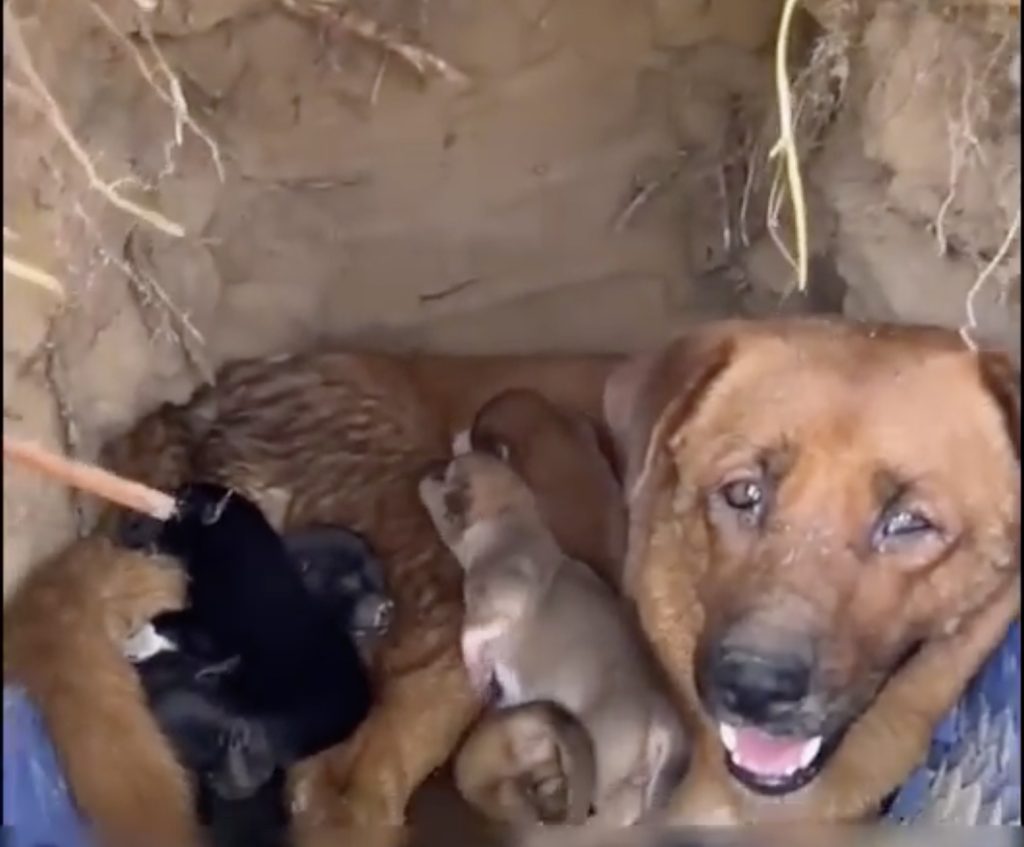
She led them through the edge of the woods, across rough ground and beneath the golden glow of the afternoon sun. Finally, she stopped at a small hollow beneath a cluster of tangled tree roots. There, nestled closely together, were seven tiny puppies—so small their eyes had not yet opened. They whimpered softly, fragile bodies pressed together for warmth. The rescuers felt tears sting their eyes. Even after suffering something so cruel, this mother had held on, her first instinct still to protect her babies. Her strength was nothing short of extraordinary.
Among the rescuers was a young woman who seemed deeply moved by what she witnessed. She knelt beside the mother dog, feeling an immediate connection—something pure, quiet, and full of understanding. From that day forward, she returned every morning and evening, carrying food, fresh water, and soft words of comfort. The mother dog, whom they later named Eagle, accepted her presence with gentle gratitude. She would wag her tail slowly whenever the woman approached, as though recognizing a friend she could trust. Each visit became a ritual of compassion, a shared rhythm of healing that slowly mended what had been broken.
Days turned into weeks, and under Eagle’s devoted care—and the woman’s steady kindness—the puppies began to flourish. Their tiny eyes opened to the world, their legs grew sturdy, and soon they were tumbling clumsily through the grass. Eagle herself grew stronger. Her coat looked healthier, her eyes brighter. She watched her pups play, her gaze full of relief and pride. There was no fear in her now. She understood she was safe. She remembered the hands that had lifted her from the darkness, and she carried that memory with grace.
One soft afternoon, as the sun dipped behind the trees, the young woman arrived with news: it was time to take the little family home. She wrapped the puppies in soft blankets and lifted them gently, while Eagle followed closely, tail wagging and eyes filled with trust. The family who awaited them had prepared a warm shelter filled with clean straw and laughter. It was a place where kindness lived in every corner. Children ran out first, reaching their hands toward the dogs with excitement and wonder. Eagle sniffed their palms before lowering her head into their touch, as if offering a quiet thank-you.
From that moment on, Eagle and her puppies were no longer strays. They were a family—cherished, protected, and deeply loved. The young woman visited often, watching them grow, play, and settle into their new lives. Eagle walked beside her through the same paths where she had once felt lost and afraid. Now those paths held only peace. Her eyes, once dim with exhaustion, now shone with calm confidence. Sometimes she would pause, lifting her face to the wind, remembering the day everything changed—and how kindness had carried her into a new life.
As people learned her story, they were moved by its profound message. They spoke of a few strangers whose quick compassion transformed a moment of suffering into a miracle. They spoke of Eagle’s unwavering devotion to her puppies, and of the young woman whose simple act of care saved eight precious lives. It reminded everyone who heard it that tenderness still matters—that empathy still carries power.

Today, Eagle’s story is shared not as a tale of tragedy, but as a symbol of hope. She walks proudly with her family, her pups now strong and full of joy. Sometimes she returns to the field where it all began. The wind still carries traces of that early cry, but now it sounds like a whisper of gratitude—soft, warm, and everlasting.
This story reminds us that kindness is never wasted. Every gentle act sends ripples through the world, touching hearts in ways we may never see. In saving one mother and her babies, those golfers discovered something far greater than the game they came to play—they discovered the miracle of compassion and the timeless bond between humans and the loyal animals who walk beside us.
And in the quiet wag of a tail and the grateful gaze of a once-lost soul, we are reminded that love—freely given—always finds its way home.